
What Your Coach Is Actually Watching For During a Set
From the outside, a set looks simple: someone lifts something, puts it down, and does it again. From behind a coach's eyes, a set is a list of small facts.
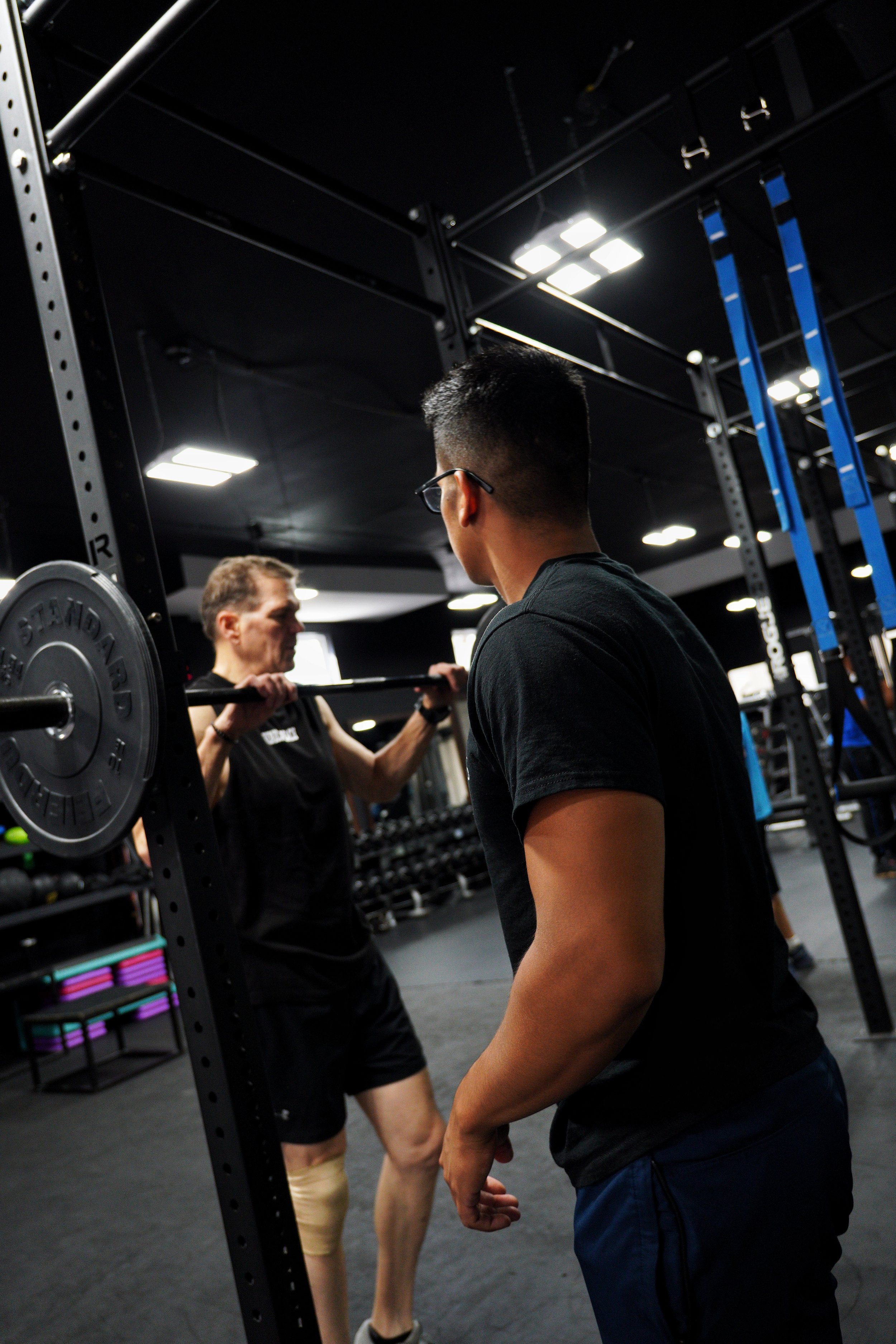
Where is the bar path drifting. Whether the last two reps slowed down more than they should have. Whether that slight lean forward is fatigue or a form habit that's been there for weeks. Whether today's face looks like someone who's fine, or someone who's not going to say they're not fine.
None of this is dramatic. Most of it never gets said out loud. A coach might adjust a cue, ask a question that sounds unrelated ("how'd you sleep"), or just make a note to check in again next set. The work of noticing is mostly invisible — which is part of why it's easy to underestimate.
This is the actual difference between training with a coach and training without one. It's not that a coach yells louder or knows more exercises. It's that someone is watching closely enough to catch the thing you didn't know to watch for yourself — the knee that's tracking in, the rep that's technically completed but quietly compensating for something else, the week where your numbers are up but your affect is flat.
At EMBODI, this is what a six-person SPT session and a 1:1 PT session have in common, even though the format is different. Semi-private training runs a structured program, but it's still a coach watching six sets, not sixty. Private training is built around one person from the first session, which means the attention starts even earlier — before the first rep, in the build of the program itself.
Neither format works without someone actually watching. That's the whole premise.